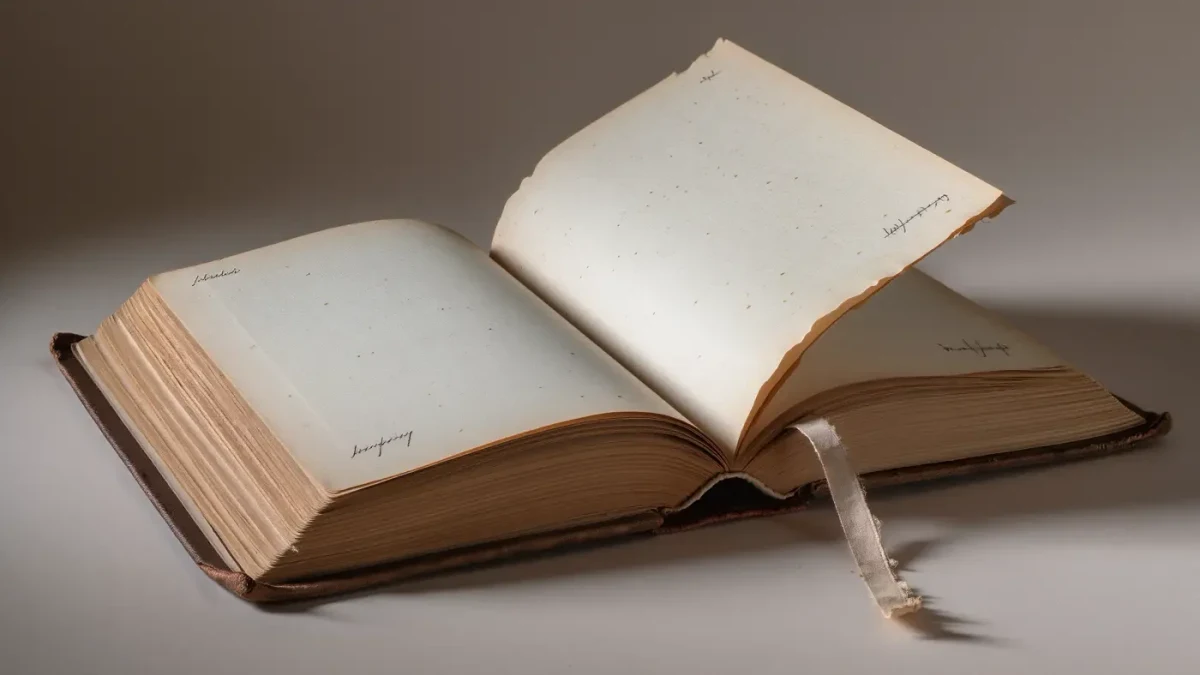
The Index Librorum Prohibitorum — the Index of Forbidden Books — was the Catholic Church’s list of titles the faithful were forbidden to read, first issued by Pope Paul IV in 1559 and abolished by Paul VI in 1966. In between, it grew to roughly 4,000 banned titles and became the quietest, most effective marketing machine in European publishing.
A banned-books list sounds medieval. In fact its classic form is early modern — a product of the printing boom that Rome attempted to administer — and its formal abolition in 1966 is recent enough that the Vatican’s announcement was covered as news by television crews. Four hundred and seven years is a long run for any administrative instrument, and the Index’s history is less a story of suppression than of a bureaucracy slowly discovering the limits of its own lever.
What was the Index Librorum Prohibitorum?
The Catholic Church’s official list of books the faithful were forbidden to read or keep without permission, backed by canon law and enforced through confession, printers’ licensing and local clergy. First issued under Paul IV in 1559, recast after the Council of Trent in 1564, it was revised and reprinted for four centuries; the last edition appeared in 1948.
Administration mattered more than thunder. A Roman congregation maintained the list, examined titles on complaint and issued rules — whose works were banned wholesale, which needed correcting, which were forbidden only to particular classes of reader. Dioceses and Catholic universities kept local enforcement; in the Papal States the list carried police force. The 1948 edition, with its supplements, ran to roughly four thousand titles.
The 1559 original was the harshest version, banning entire catalogues of certain printers and whole categories without appeal. The Tridentine revision of 1564 softened the mechanism and attached formal rules, and that template — graduated prohibitions, correction procedures, a standing congregation — proved durable enough to survive essentially unchanged into the twentieth century. Machines of this kind rarely die of opposition; they die of irrelevance, and it took a while.
Which writers were on the Index of Forbidden Books?
Much of modern European intellectual history, sampled chapter by chapter. Copernicus was suspended until corrected in 1616; Galileo’s Dialogue followed in 1633 and stayed listed into the nineteenth century; Descartes, Pascal, Voltaire, Kant, Bergson, Zola, Sartre and Beauvoir all appear. The sciences and the novel were represented about equally — which became the list’s problem.
| Work | Author | Listed |
|---|---|---|
| De revolutionibus orbium coelestium | Copernicus | 1616, suspended until corrected |
| Dialogo sopra i due massimi sistemi | Galileo | 1633, into the nineteenth century |
| philosophical works | Descartes | 1663 |
| Lettres provinciales | Pascal | 1657 |
| collected works | Voltaire | eighteenth century |
| Critique of Pure Reason | Kant | 1827 |
| novels | Zola | 1890s |
| L’Évolution créatrice | Bergson | 1914 |
| works | Sartre | by 1948 |
Listing the seventeenth century’s astronomers and the nineteenth century’s novelists made a point the Church eventually heard. A register that banned both heliocentrism and Parisian naturalism was not describing special dangers; it was describing modernity — and by the twentieth century the faithful were reading both anyway, permissions or no permissions. The Index’s own contents became its most effective indictment.
Related stories: Bound in Iron: What Chained Libraries Reveal About the Price of Books · Writing Back: A Short History of Marginalia.
Did the Index actually work?
Unevenly, and often in reverse. In Italy, Spain and Portugal it could make a book effectively unpublishable; in Protestant countries it functioned mostly as free advertising, since a papal ban was the cheapest publicity a freethinker could obtain. Enforcement depended on local clergy, obedient printers and readers who confessed — three links that time steadily weakened.
Enforcement had its theatre. Public burnings of prohibited books accompanied major condemnations, licenses were issued volume by volume to scholars with stated reasons, and Catholic universities kept copies of forbidden philosophy under supervision — read, but on a leash. The net effect was less silence than friction: forbidden arguments circulated anyway, at higher cost and lower speed, which is the most a list has ever achieved.
The Index also disciplined from inside, which was its deepest effect. Catholic scholars wrote with the list in mind, and publishers in Catholic markets offered pre-corrected editions to avoid a listing they could not afford. Whether it ever stopped a determined reader is doubtful; that it shaped what was easy to read everywhere Rome held sway is not. A prohibition that reaches the printing schedule before it reaches the reader has already done most of its work.
For historians, the list’s failures are as informative as its successes. Titles that never appeared tell their own story — books too trivial to notice, positions too powerful to challenge, local saints left alone for political reasons. The Index is one of the few censorship instruments that kept minutes, which is why it gets cited in these pages as evidence rather than scandal.
Why was the Index abolished in 1966?
Because the Second Vatican Council’s reforms made it indefensible. In June 1966 the Congregation for the Doctrine of the Faith, with Paul VI’s approval, announced that the Index no longer carried force of ecclesiastical law, while carefully noting that it retained moral authority. The list was not renounced; it was retired.
The timing conceded the argument. By 1966 the register’s recent entries — existentialists, novelists, psychoanalysts — read less like threats than like a university syllabus, and clergy had been quietly ignoring the rules for decades. What survives is the document itself: a four-hundred-year archive of what one institution feared in print, mined by scholars in the culture pages where banned books are commemorated far more often than they are burned — an afterlife that would have mystified the compilers of 1559.